
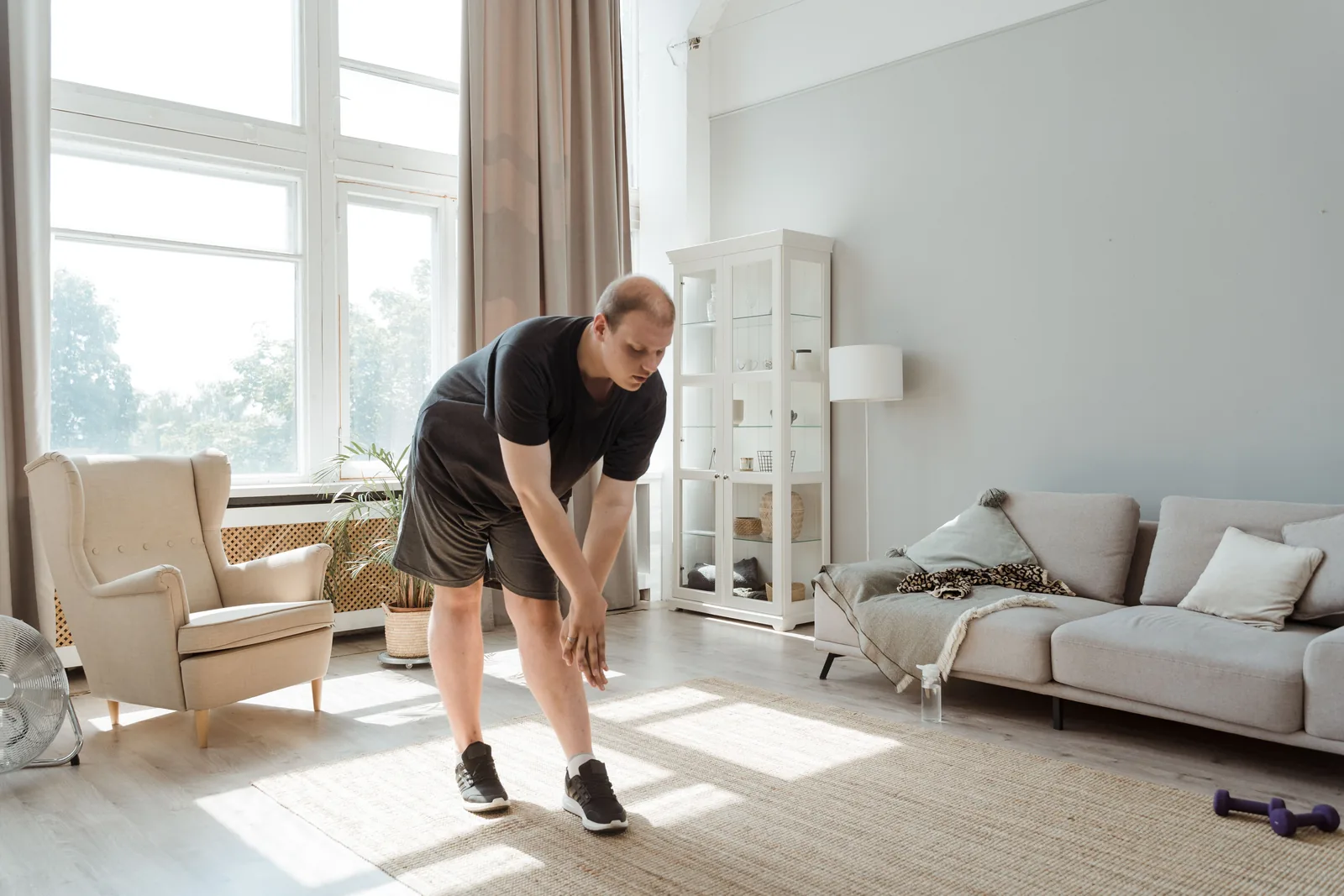
A five-minute morning sequence can provide a simple bridge between waking and the rest of the day. The routine below uses familiar movements for the shoulders, neck, sides, hips and back. It requires no special equipment, although a stable chair, wall or counter can provide support.
Why Keep the Routine Short?
A short routine is easier to place beside an existing morning cue, such as opening the curtains, washing, dressing or preparing breakfast. The limited duration also makes it easier to move carefully rather than rushing through a long list.
The aim is not to reach a particular shape or depth. The useful part is the repeated practice of moving slowly, noticing how the body feels and finishing without strain. Some mornings may suit the full sequence; on other mornings, two or three movements may be enough.
Practical tip
Keep a stable chair nearby. Light fingertip support can make standing movements feel calmer and more controlled.
The 5-Minute Sequence
1. Shoulder rolls — 30 seconds
Stand or sit tall with the arms relaxed. Lift the shoulders gently, move them back and let them settle down. Continue in a smooth circle, then reverse direction if that feels comfortable.
2. Gentle neck turns — 30 seconds
Keep the chin level and turn the head slowly to one side, return to the centre and turn to the other side. Use a small range and avoid pushing at the end of the movement.
3. Standing side reach — 60 seconds
Stand with the feet comfortable apart. Reach one arm upward and lean slightly to the opposite side while keeping both feet grounded. Return to the centre and repeat on the other side.
4. Hip circles — 60 seconds
Place the hands on the hips or use a chair for balance. Draw small circles with the hips, keeping the knees soft. Change direction halfway through the minute.
5. Supported forward fold — 60 seconds
Place both hands on the back of a stable chair or on a counter. Step back and hinge at the hips until the back feels long and the arms are extended comfortably. Keep the knees slightly bent and return slowly.
6. Calm breathing — 60 seconds
Sit or stand in a relaxed position. Let the shoulders drop. Breathe in gently through the nose if comfortable, then breathe out without forcing. Notice whether any area is still holding unnecessary tension.
Move slowly, breathe normally and stay within a comfortable range of motion.
Sample Morning Schedule
| Time | Action | Focus |
|---|---|---|
| 0:00–0:30 | Shoulder rolls | Relax the upper body |
| 0:30–1:00 | Neck turns | Use a small, easy range |
| 1:00–2:00 | Side reaches | Move evenly on both sides |
| 2:00–3:00 | Hip circles | Keep the movement controlled |
| 3:00–4:00 | Supported fold | Use support and soft knees |
| 4:00–5:00 | Calm breathing | Finish without rushing |
Ways to Adapt the Routine
- Complete the entire sequence seated when standing balance is uncertain.
- Reduce each movement to 15 or 30 seconds on a low-energy morning.
- Divide the routine into two shorter sessions.
- Use a smaller range after long periods of inactivity.
- Skip any movement that does not feel appropriate.
Summary Checklist
Morning Stretching FAQ
Does the routine have to be completed immediately after waking?
No. It can be placed after washing, dressing or breakfast if that feels more comfortable. A repeatable time matters more than an exact clock time.
Can the routine be done in a chair?
Yes. Shoulder rolls, neck turns, side reaches and breathing can all be adapted to a stable chair. Hip movement can be smaller and supported.
Should a stretch feel intense?
No. Use a mild, comfortable range and avoid forcing a position. The routine is designed as gentle everyday movement.
Related Articles
Informational Disclaimer
The content on this website is provided for general informational and educational purposes only. It is not a substitute for professional medical advice, diagnosis or care. Individual needs and abilities vary. Consult a qualified healthcare professional before starting a new exercise routine or making significant changes to your diet or lifestyle, especially if you have an existing health condition. Stop any activity that causes pain, dizziness or unusual discomfort.